domingo, 17 de febrero de 2013

Roald Dahl

Esta entrada está dedicada a un escritor británico cuyos libros han sido adaptados al cine en numerosas ocasiones, se trata de Roald Dahl. Seguro que os suena la película "Charlie y la fábrica de chocolate"; historias como "Matilda", "Los Gremlins" o "James y el melocotón gigante" fueron escritas por este autor que también se atrevió con la poesía en títulos como "Cuentos en verso para niños perversos".

Os copio y pego su Bibliografía extraída de Wikipedia:

Children's stories

  1. The Gremlins (1943)
  2. James and the Giant Peach (1961) – FilmJames and the Giant Peach (live-action/animated) (1996)
  3. Charlie and the Chocolate Factory (1964)– FilmsWilly Wonka & the Chocolate Factory (1971) and Charlie and the Chocolate Factory (2005)
  4. The Magic Finger (1 June 1966)
  5. Fantastic Mr Fox (9 December 1970) – FilmFantastic Mr. Fox (animated) (2009)
  6. Charlie and the Great Glass Elevator (9 January 1972) A sequel to Charlie and the Chocolate Factory.
  7. Danny, the Champion of the World (30 October 1975) – FilmDanny the Champion of the World (TV movie) (1989)
  8. The Enormous Crocodile (24 August 1978)
  9. The Twits (17 December 1980)
  10. George's Marvellous Medicine (21 May 1981)
  11. The BFG (14 October 1982) – FilmThe BFG (animated) (1989)
  12. The Witches (27 October 1983) – FilmThe Witches (1990)
  13. The Giraffe and the Pelly and Me (26 September 1985)
  14. Matilda (21 April 1988) – FilmMatilda (1996)
  15. Esio Trot (19 April 1989)
  16. The Vicar of Nibbleswicke (9 May 1990)
  17. The Minpins (8 August 1991)
Children's poetry
  1. Revolting Rhymes (10 June 1982)
  2. Dirty Beasts (25 October 1984)
  3. Rhyme Stew (21 September 1989)


Espero que encontréis interesante algún título y os animéis a leerlo. Si pincháis aquí los encontraréis en español: Bibliografía de Roald Dahl

Esta es su página oficial:    http://www.roalddahl.com/


martes, 5 de febrero de 2013

It's Carnival!


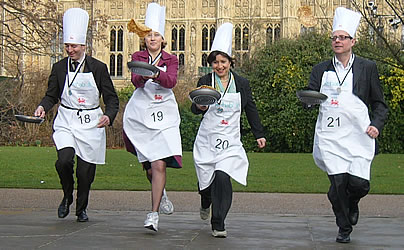
Next Tuesday, 12th, February, it is Shrove Tuesday, also called Pancake Day. It's the day preceding Ash Wednesday, the first day of Lent. Shrove Tuesday is linked to Easter.

Pancakes are associated with the day preceding Lent because they were a way to use up food such as eggs, milk and sugar before the fasting season of the 40 days of Lent. [Los "pancakes" están asociados al día previo a la Cuaresma porque era una manera de gastar alimentos como huevos, leche y azúcar antes del período de ayuno de los 40 días de la Cuaresma].

Vocabulary:
Shrove Tuesday: Martes de Carnaval.
Ash Wednesday: Miércoles de Ceniza.
Lent: Cuaresma.
Easter: Semana Santa.


In the United kingdom Shrove Tuesday is regarded as a tradition. This day is also known as Pancake Day as it is usual to eat pancakes as a dessert.


The most famous pancake race at Olney in Buckinghamshire has been held since 1445.

On Pancake Day, pancake races are held in villages and towns across the United Kingdom. The tradition is said to have originated when a housewife from Olney was so busy making pancakes that she forgot the time until she heard the church bells ringing for the service. She raced out of the house to church while still carrying her frying pan and pancake.


Let's make a carnival mask!       
                                       

miércoles, 16 de enero de 2013

School Day of Non-Violence and Peace: January, 30th.


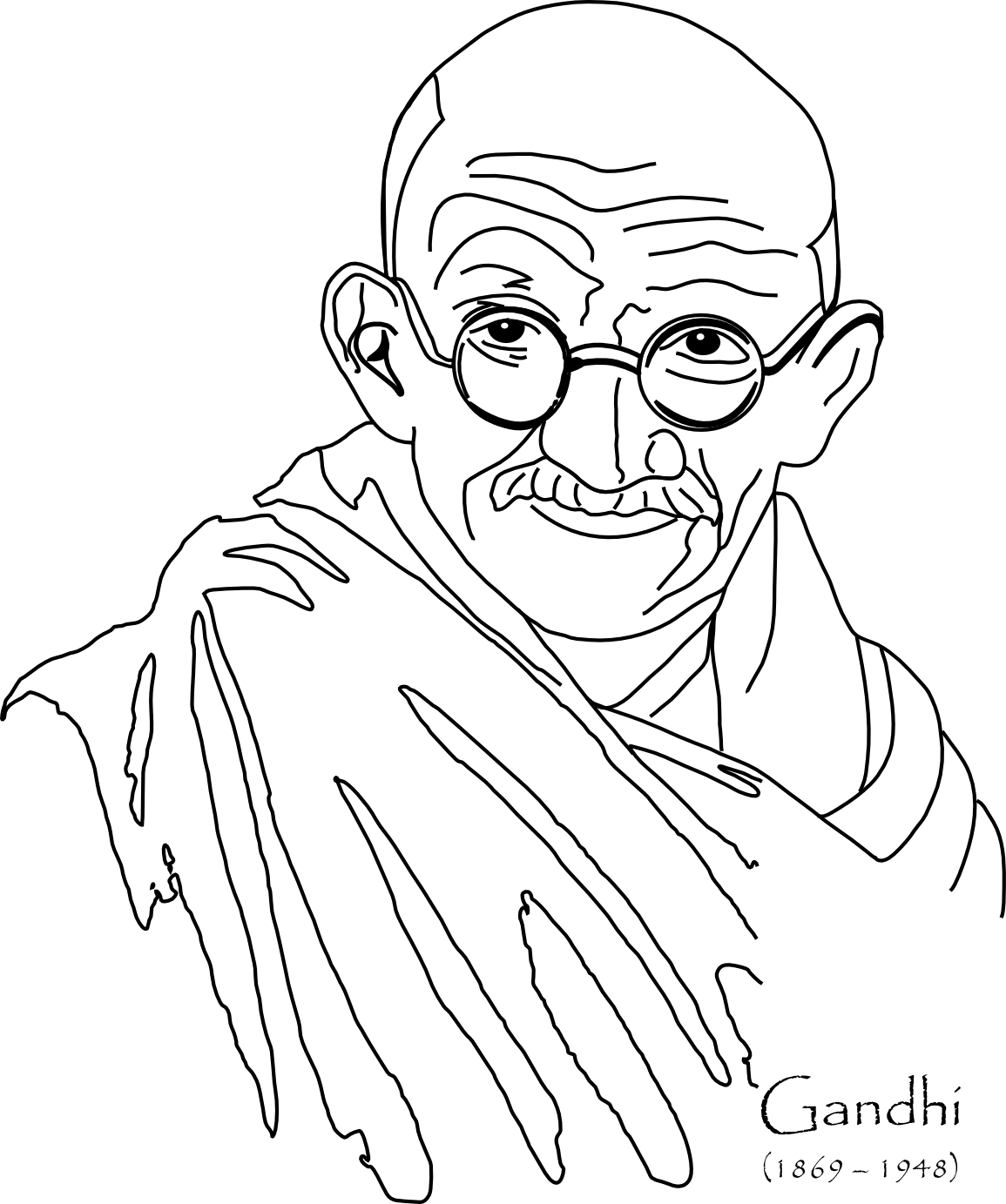
Desde 1964, para conmemorar la muerte de Gandhi, se celebra el 30 de enero el Día Escolar de la No Violencia y la Paz, reconocido por la UNESCO en 1993. En esta fecha se recuerda la necesidad de la educación para la tolerancia, la solidaridad, el respeto a los Derechos Humanos, la no violencia y la pazEl lema de este día es: 'amor universal, no-violencia y paz. El amor universal es mejor que el egoísmo, la no-violencia es mejor que la violencia y la paz es mejor que la guerra'.   [Cita del ITE]

Mahatma Gandhi was the preeminent leader of  Indian nationalism in British-ruled India. Employing  non-violent civil disobedience, Gandhi led India to independence and inspired movements for non-violence, civil rights and freedom across the world. He died on 30 th January 1948.  He was shot by an Hindu nationalist.
                                    eople united around the world.
                                    nd all wars and conflicts.
                                    ll citizens helping each other.
                                    elebrate Peace Day every day.
                                    veryone holding hands in harmony.

Vamos a recordar algunas normas de clase que mejoran nuestra convivencia.

Some Class Rules that will make you a better person:

1. Be kind and fair to others.

2. Listen when others are talking.

3. Respect other's opinions.

4. Work quietly and do not disturb others.

5. Work and play safely.

6. Respect other's property.

7. Show good manners: Say "please" and "thank you".

8. Share.

9. Take turns.

10. Help each other.


This is the song we´re going to sing all together to celebrate Peace Day.


                                                                  You can practise at home


lunes, 7 de enero de 2013

The 2nd Term begins.


Comienza el segundo trimestre :-D
Espero que hayáis descansado y que también os lo hayáis pasado muy bien durante las vacaciones de Navidad. Vamos a retomar el trabajo de clase con ilusión y a seguir practicando el inglés en nuestro rincón: "English Corner" :-)

A mis mayores de les recuerdo que tienen que entregar los Projects a lo largo de esta semana (fecha tope el viernes 11). El título del trabajo es "When I'm older ..." y debe comenzar así: "When I'm older I want to be a/an ...". Ya sabéis que para redactarlo seguimos el patrón de las actividades del Activity Book y que podéis ilustrarlo de la forma que más os guste, cuanto más bonito, mejor.


Los chicos de 3º se quedaron con ganas de hacer un trabajo sobre "wild animals" y, como lo prometido es deuda, lo prepararemos en los próximos días. Ya podéis ir pensando qué animal salvaje vais a describir ;)


En general os seguiré enlazando actividades online en cada unidad de 2º, 3º, 4º y 6º, sin olvidar las de la página web de Macmillan (2ª pestaña del blog) que son muy chulas.

See you tomorrow!.

Teacher Mª Carmen.


lunes, 24 de diciembre de 2012

Christmas Eve

It's Christmas Eve (December 24th), Nochebuena:
En España llamamos así a la víspera del Día de Navidad,
Christmas Day (December 25th) en los países anglosajones. 
People meet with family and friends to  have fun. Then, they  go to church to listen to Christmas carols.
Before going to bed English children leave a 
stocking for Father Christmas.


En España, después de la cena de Nochebuena en familia, se celebra la tradicional Misa del Gallo. En los países de habla inglesa la comida más importante es el día 25, Christmas Day; en ella no puede faltar el tradicional pavo asado (roast turkey) y un postre muy navideño: Christmas Pudding, que se elabora con frutos secos.


Children like crackers too.
Otras fechas importantes son 
Boxing Day (December 26th), el día de los Aguinaldos.
Día de los Santos Inocentes (28 de diciembre).
 New Year's Eve (December 31st), Nochevieja. 
New Year's Day (January 1st), Año Nuevo.
Los Reyes Magos (6 de enero), The Three Wise Men.
 ¿Ya habéis escrito la carta a sus Majestades de Oriente?. 


Ending the first term!

Merry Christmas!

¡Feliz Navidad!


.......................................................................

sábado, 22 de diciembre de 2012

Christmas Photocall_2012


PlayStop and Play again to listen to the music -
(IniciaPara e Inicia otra vez para escuchar la música)


Merry Christmas!